

By Julian Amodeo ’26, Creative Writing
“I could die. But I know what I’m dying for.”
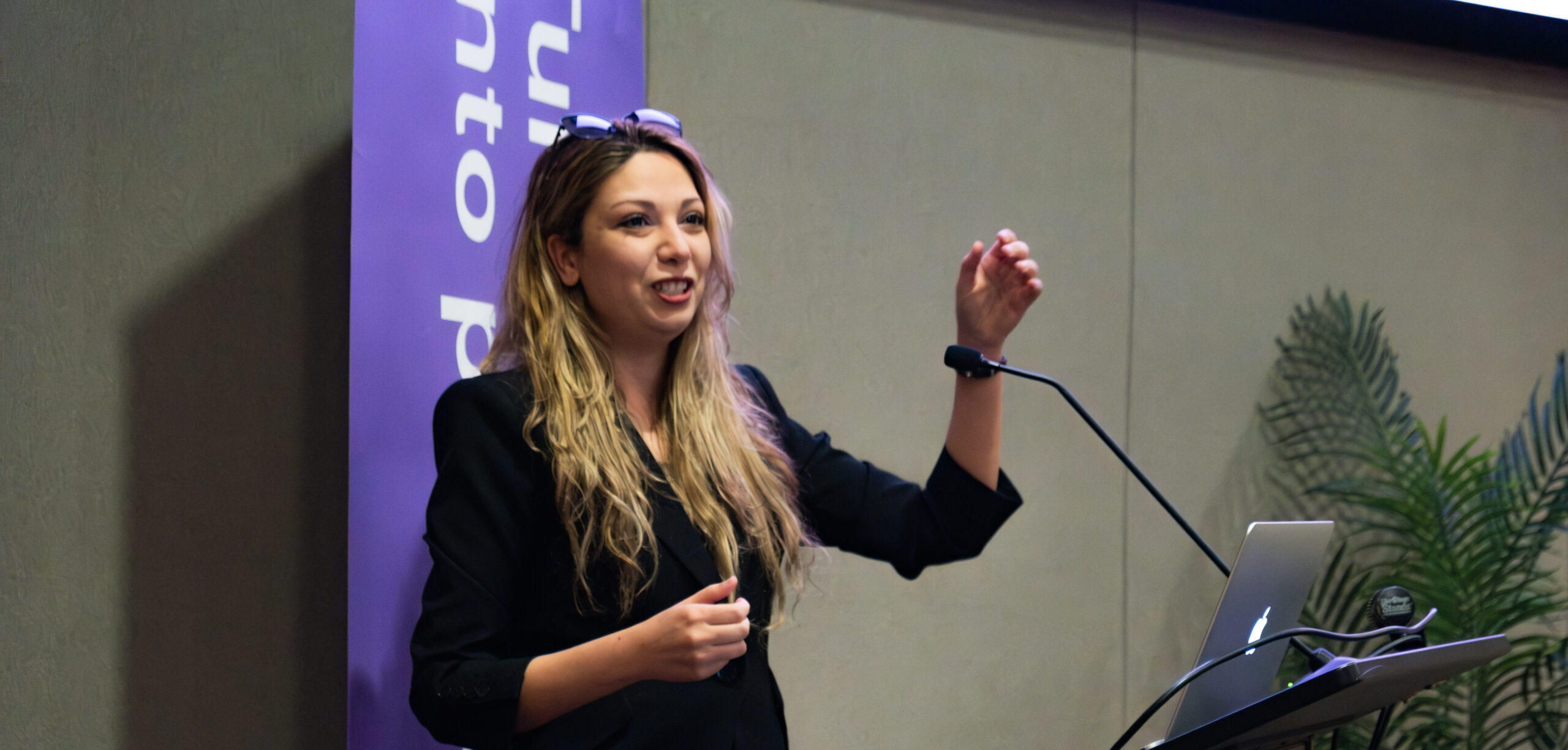
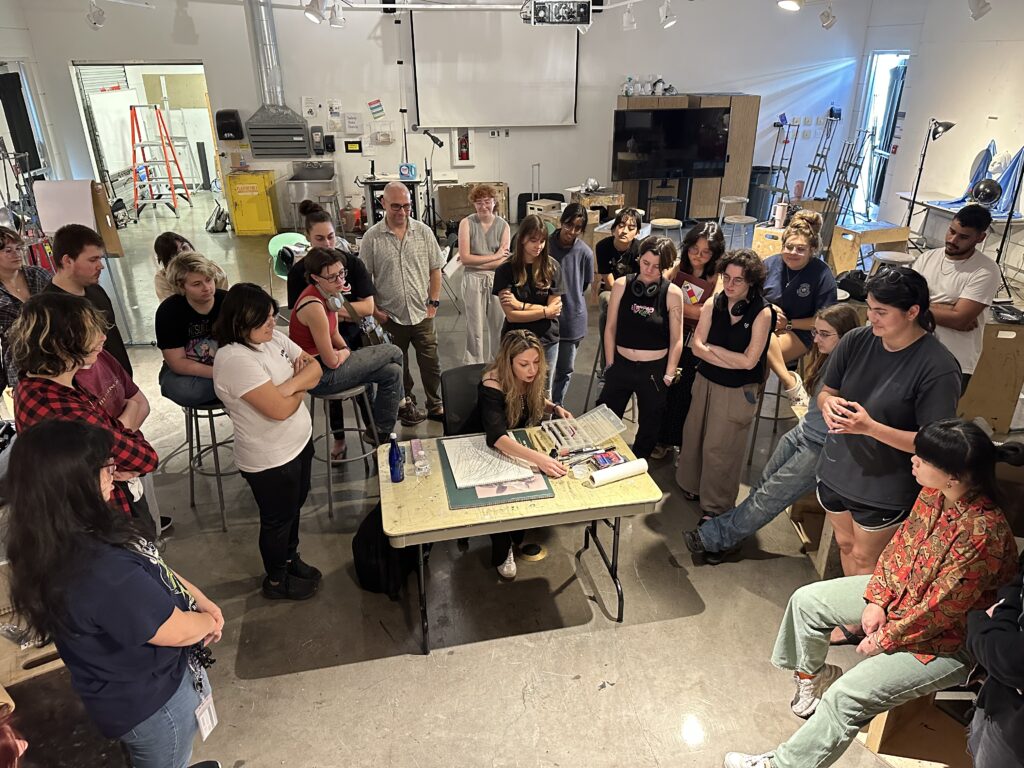
Nasrin Sheykhi, a 36-year-old Persian multi-media cartoonist, came to the United States nine years ago on the prestigious Einstein Visa. She has earned more than 40 international awards, published two books, and has been featured in the New York Times. She was brought to campus by Illustration faculty member George Pratt, Illustration Department Head Christina Hess, and Associate Dean for Student Success and Director of the Center for Student Success, Dr. Elçin Haskollar of Ringling’s own Center for Student Success.
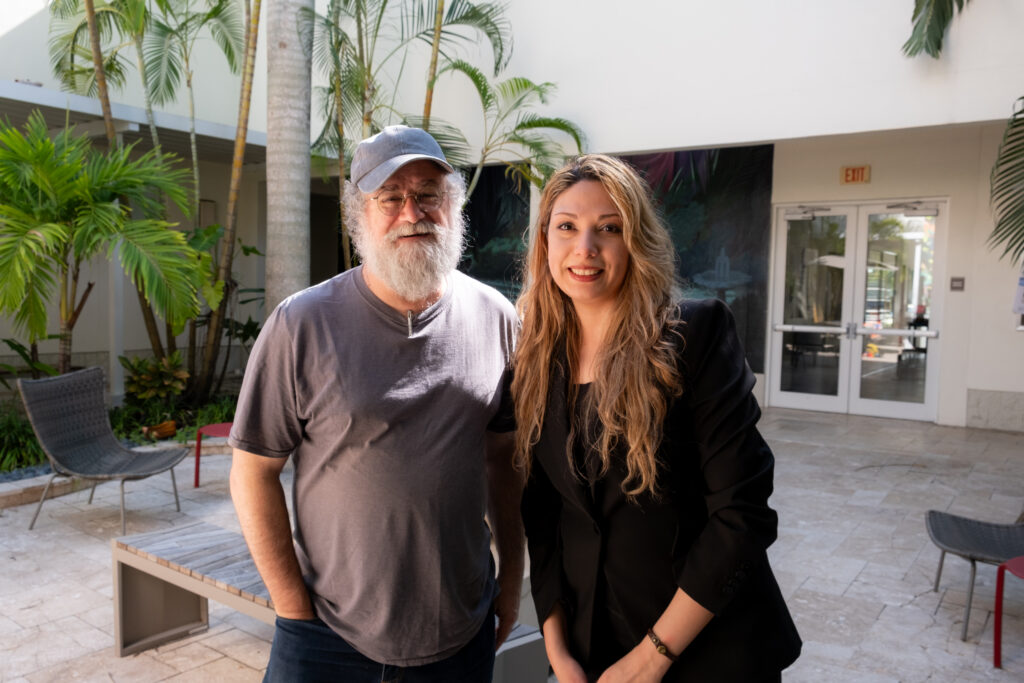
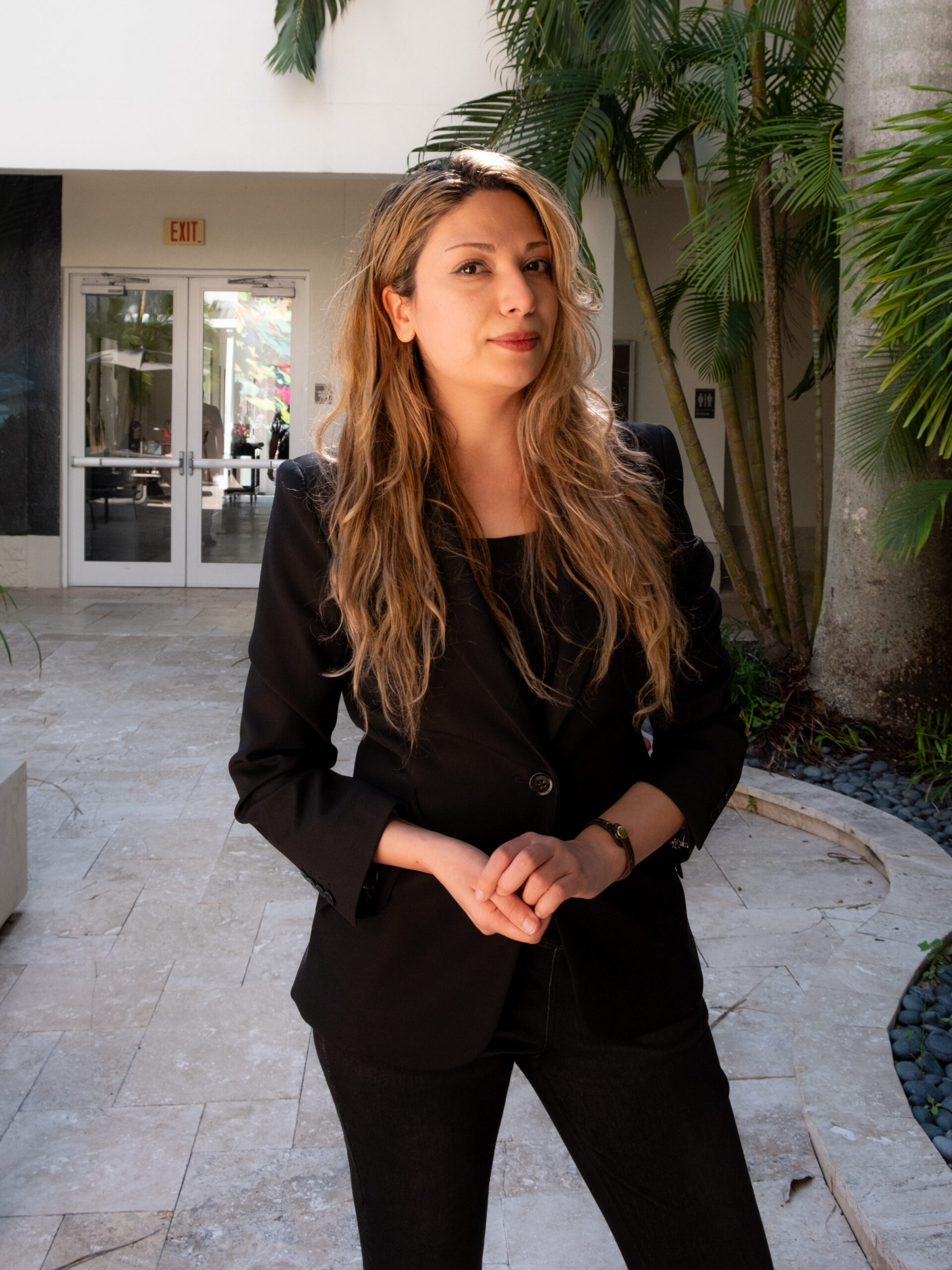
Dressed sleek and semi-formal, Sheykhi had a quiet power to her from the moment I entered the auditorium. Political unrest is not something that is unfamiliar within the United States, but the magnitude of terror that Sheykhi explored in just under an hour clouds anything we are used to.
“In my opinion,” Sheykhi began, “as an artist, you create your art on the basis of your environment.”
Sheykhi explained that Persia, Iran, is under a ruthless regime, where its people, especially its women, are under an iron fist. There is a strict lack of freedom of speech, and as she said, there is no age limit, young or old, to who can be prosecuted for speaking out.
Sheykhi made it clear that a big catalyst of her work, and of the Iranian feminist movement, was the death of 22-year-old Mahsa Amini, who was detained after not wearing her hijab by the “morality police,” or Guidance Patrol, and suffered as a result of police brutality.
Sheykhi’s first graphic essay was born from this event at a Starbucks here in the United States, which she named Starbucks Revolution, to “build a connection between Americans and Persians.”
“I was walking to Starbucks, and it was autumn, and the wind was blowing my hair. I thought to myself, wow, just imagine [going] back to my country. This wind in my hair is a crime. How crazy is that? Right now, I’m experiencing this wind in my hair, and at the same time, a lot of people are getting shot and dying because of this simple hair.”
The essay follows how Sheykhi would send her mother text after text, knowing she could not receive them, and how one day, she went to Starbucks. On the cup was the iconic mermaid.
“After I finished my drink, I stared at this mermaid. She was a lady, too, you know? And I thought to myself, well, she can join our revolution. I drew scissors, and she’s cutting her hair, and on top of that I write ‘Women, Life, Freedom, Iran Revolution, 2022.’”
Since then, she has made many risky, bold, bloody political cartoons, including Constitution of the Islamic regime book, which she said she had sketched for 10 years before she finally released it, due to fear.
Her fear was rightfully placed; such criticism of the constitution can quickly result in execution. She has created work celebrating others who protest using their art, such as Iranian rapper Toomaj Salehi, as well as bringing attention to topics as dark as organ harvesting within her country.
“I designed a different type of weapon,” Sheykhi declared. “A traditional, classic weapon for those who are protesting. I think because the regime has weapons, it’s unfair. They’re going to the streets with real weapons, killing people. People must have weapons, too. That is war.”
Her most powerful proclamation of the afternoon that truly stuck with me as a writer and artist myself, was that “being an artist in this country, we need to talk; we can talk with our art. You gotta get kind of fearless. [I want to] encourage people to not give up.”
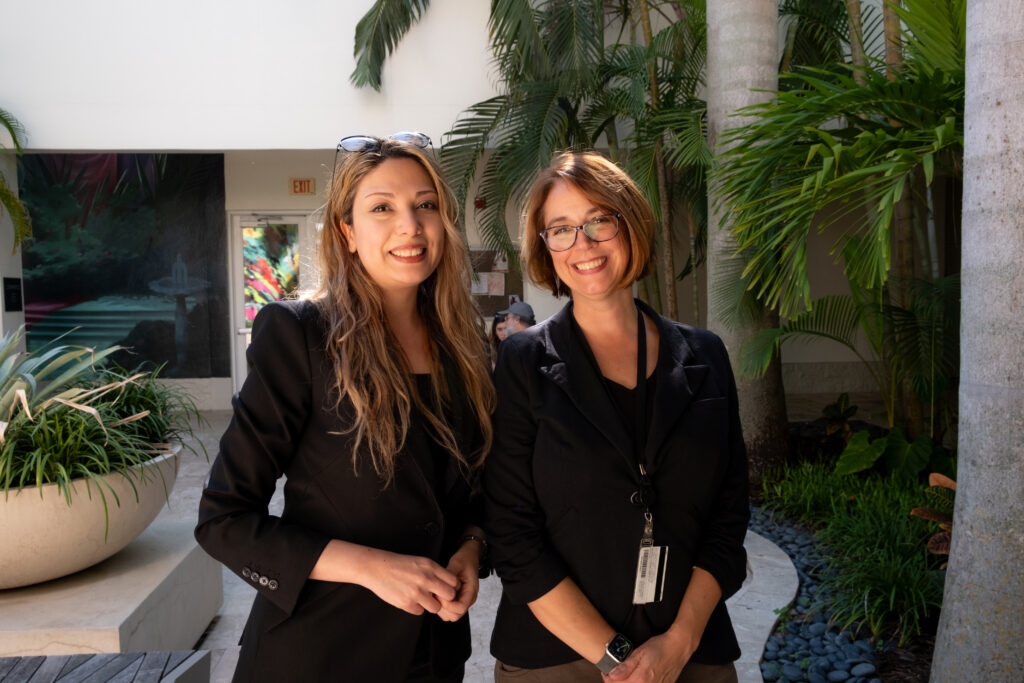
I had the chance to talk to Christina Hess about her experience with Sheykhi’s talk, as well as with Nic Surgit ’26, Illustration, who attended alongside me. When asked about what had been the most powerful aspect, both individually expressed their admiration for her incredible ability to amplify her voice without fear.
“I felt very strongly about Nasrin’s determination to use her voice against systemic oppression,” Surgit wrote to me. “She’s unafraid to show the ugly side of the world through her art and writing.”
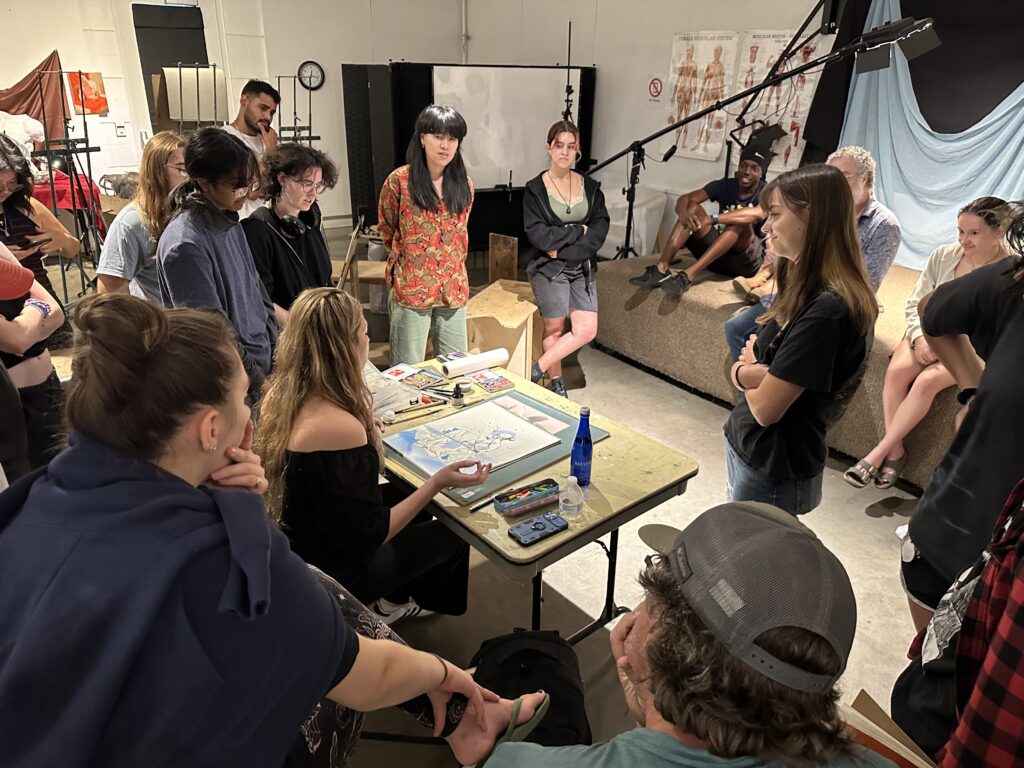
Both had also mentioned her extraordinary multimedia talent. During our conversation, Hess expressed with tangible excitement that “from an illustrator, an artist’s perspective, the one thing that I definitely took away from [her talks] was her ability to do different types of disciplines and mediums and industries. I feel her perspective is definitely heightened in a lot of darkness.”
The work mentioned, as well as much, much more, can be found on Sheykhi’s Substack (don’t worry; it’s free!), as well as on her Instagram. She also has prints and originals of her work available for sale on her website, in case you would like to financially support her fight.
Sign up for our newsletter to get the latest Ringling College news in your inbox.
Contact:
Office of Marketing and Communications
communications@ringling.edu
941-309-4008