


By Ethan Connolly ’29, Entertainment Design, and Cam Contreras ’29, Creative Writing
To celebrate the renowned works of Lino Tagliapietra, Barbara Basch has displayed a collection of his glassblown art pieces in the Richard and Barbara Basch Glass Gallery at Ringling College. The Basch glass collection features over 40 artworks that celebrate Lino Tagliapietra’s marvelous artistry.
Barbara Basch and her late husband, Richard Basch, have collected dozens of glass-blown artworks for their contemporary glass collection since 1993. Their involvement with Ringling College began in 2009, when they donated their 300-piece glass collection to the college, which is part of an exclusive gallery there. Various pieces from the Basch glass collection are displayed annually in a gallery that honors both the collection and its collectors. Their involvement did not stop there—as in 2014, the Basches gave a generous donation to Ringling College that helped erect the Richard and Barbara Basch Visual Arts Center, which has helped transform Ringling College.
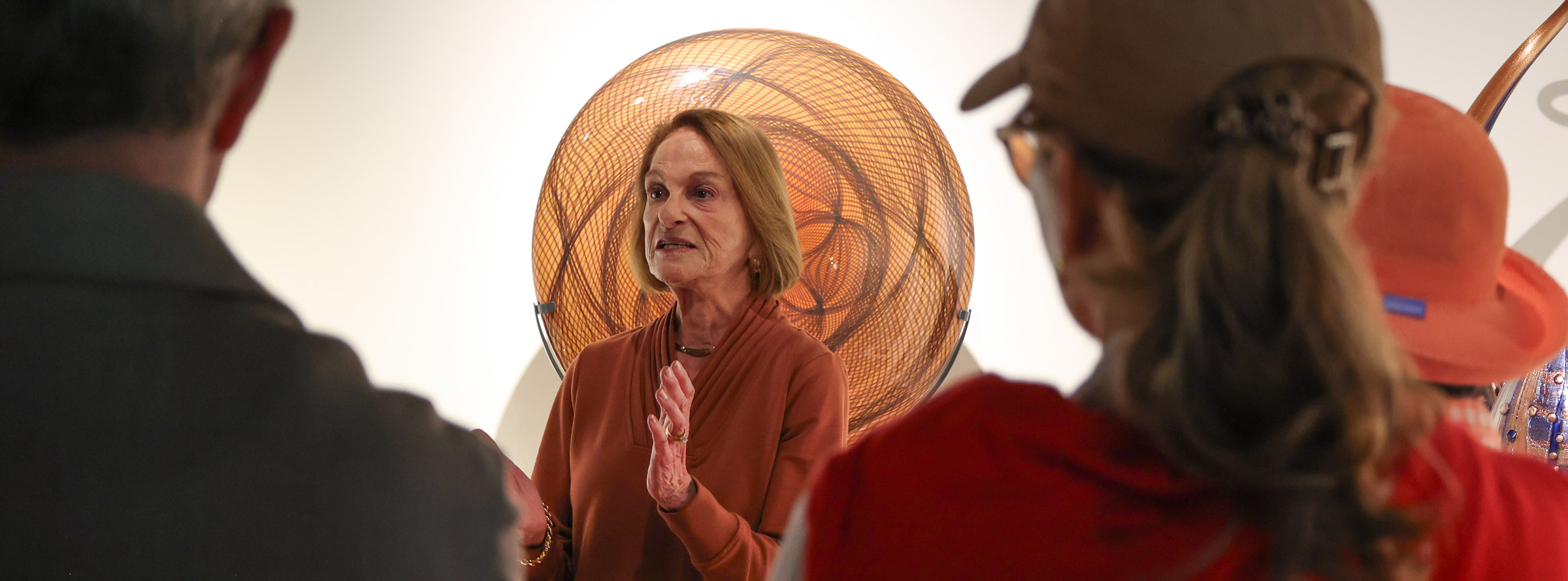
The Basches became fascinated with Tagliapietra’s works when they first collected one of his pieces several years ago. The seemingly gravity-defying geometric forms, along with the bold color palette used, attracted their attention immediately. They have collected over 40 of Tagliapietra’s glassblown artworks.
Tagliapietra’s career spans well over seven decades, during which he has produced hundreds of uniquely stunning blown-glass pieces. His works derive from centuries-old traditions of Venetian glassblowing that have been infused with his own contemporary art styling to produce exuberantly dynamic forms of art. Tagliapietra’s works have always combined rich history with stunning innovation in a perfect blend.

What makes Tagliapietra’s works so visually stunning are his glassblowing techniques, vibrant color palettes, and sculptural meticulousness. When Basch was asked why she chose to showcase Tagliapietra’s works, she stated, “I want to make him feel honored. He can no longer create glass-blown works because they require a lot of upper-body strength.” The glassblown artworks displayed in the gallery are some of Tagliapietra’s most visually captivating pieces. His Dinosaur series comprises a few glass pieces that utilize scale and color in a breathtaking perspective. The twisting geometry of the thin neck gives way to a vase-like base infused with vibrant colors arranged in a radial form. Basch went on to explain that, with all of Tagliapietra’s works, there was always a level of understanding in chemistry and geometry needed to perfect the techniques used in glassblowing. Fuji, London, and Africa are a few more notoriously beautiful pieces created as an artistic tribute to those countries, with their color palettes being inspired by dominant and primary colors found within the countries. When light shines onto these pieces, the reflected color brings a new vibrance and energy to the space in which they occupy. Each glassblown piece has an intimate connection held together by themes, which serve to form relationships with those observing.
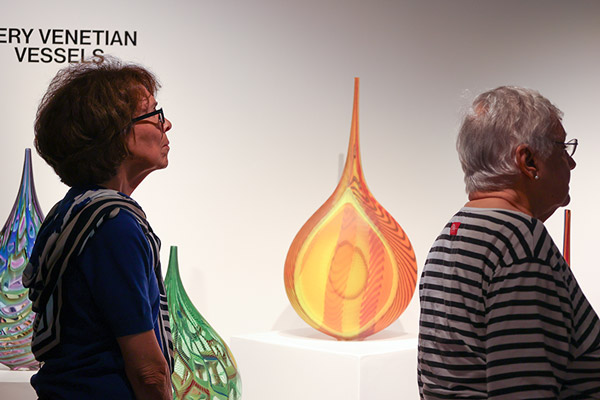
Tagliapietra’s legacy is one that will continue on. From collaborating with fellow artists to having taught students, Tagliapietra’s grasp on glassblowing has blown into other inspiring artists’ hands. Tagliapietra’s mastery of the glass medium has led to a profound career that explored the great possibilities of glassblowing. His legacy is one filled with beauty, innovation, and creative evolution, and it still continues to shape the art form of glassblowing today.
Sign up for our newsletter to get the latest Ringling College news in your inbox.
Contact:
Office of Marketing and Communications
communications@ringling.edu
941-309-4008