

By Jace Gonzalez ’28, Illustrations
Art Deco takes center stage at Sarasota Art Museum in Art Deco: The Golden Age of Illustration. During one of the Curator’s Tour events at the Museum, Senior Curator Rangsook Yoon, Ph.D., led a group of visitors through an in-depth exploration of one of the early 20th century’s most influential art movements.
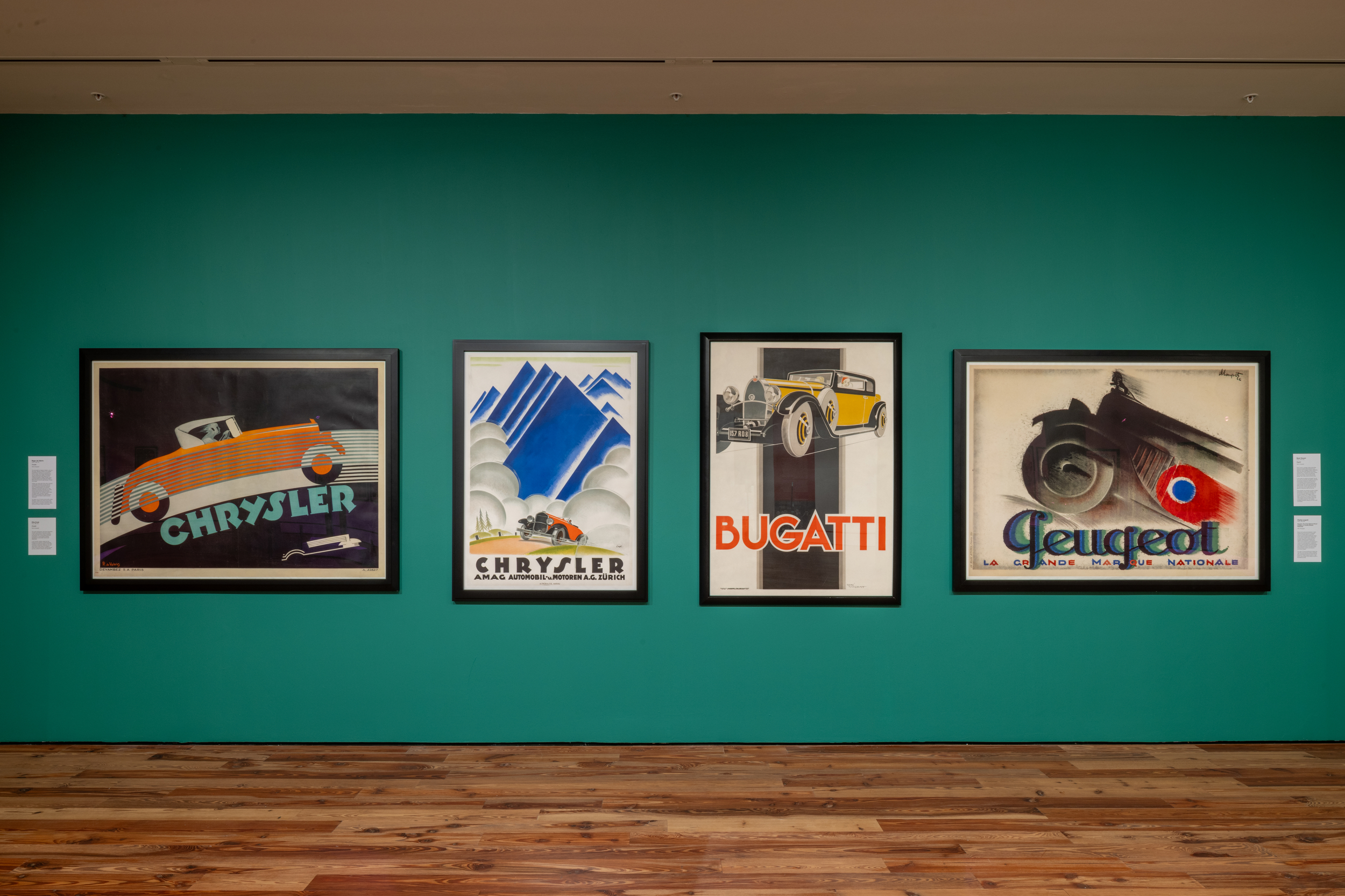
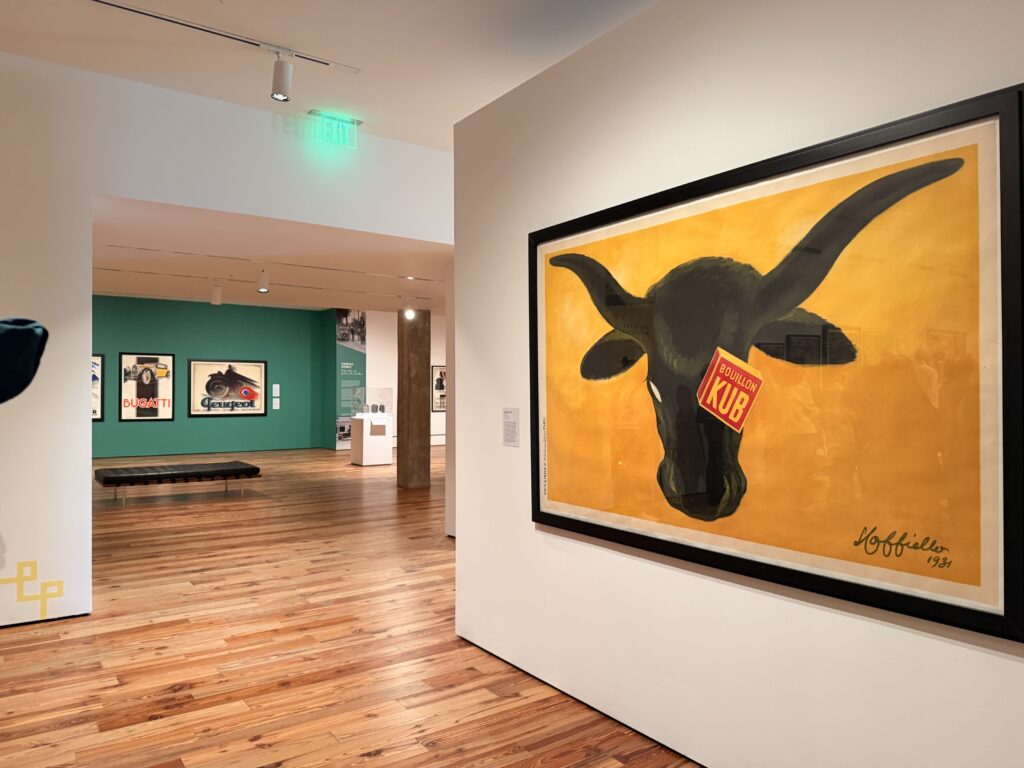
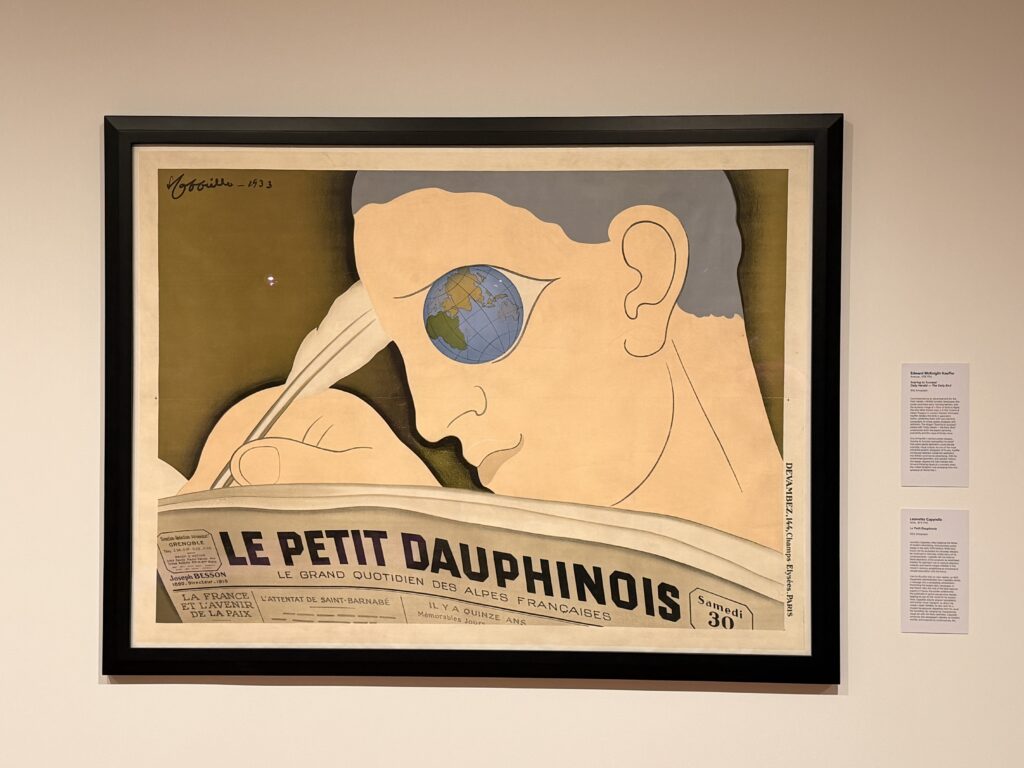
This exhibition is pretty much a graphic designer’s dream. The centerpiece is a collection of 100 rare promotional posters from the 1920s and 30s, essentially the early days of modern advertising. The posters are large-scale and cover a wide range of products and experiences, from drinks and cars to luxury travel and sporting events. What’s interesting is that several of the brands featured are still around today: Bouillon Cube, Twinings Tea, Chrysler, and even the London Underground.
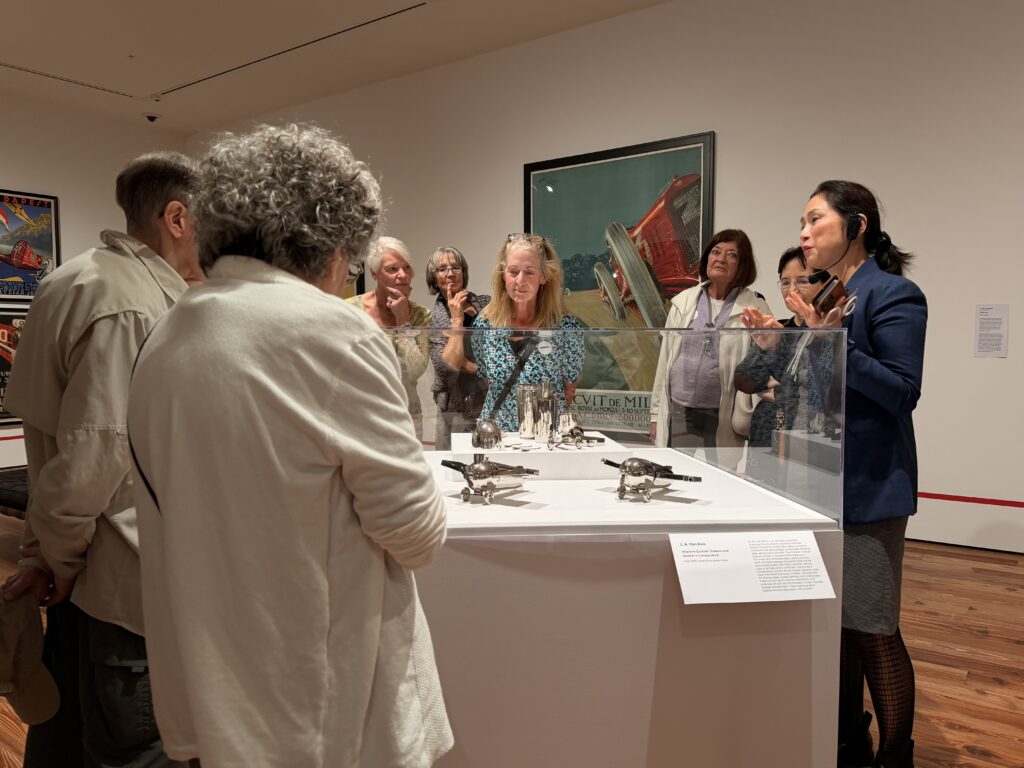
I met with a small group of Museum visitors in the second-floor gallery. It was here that we began our journey into the evolution of Art Deco.
Alongside the posters, furniture pieces from the same period on loan from the Wolfsonian Museum at Florida International University in Miami help bring the early 20th century to life. One standout is a round wood and glass table inspired by airplane propeller blades, that also doubles as magazine storage—a pretty clever design solution. There’s also a curved orange bench that was originally installed in the Cincinnati Union Terminal, one of the best surviving examples of American Art Deco architecture. It’s hard to walk past without stopping to look.
The gallery also features a solid range of other objects from the era, including original poster ads, tea sets, emblems, and toy replicas of vintage aircraft.
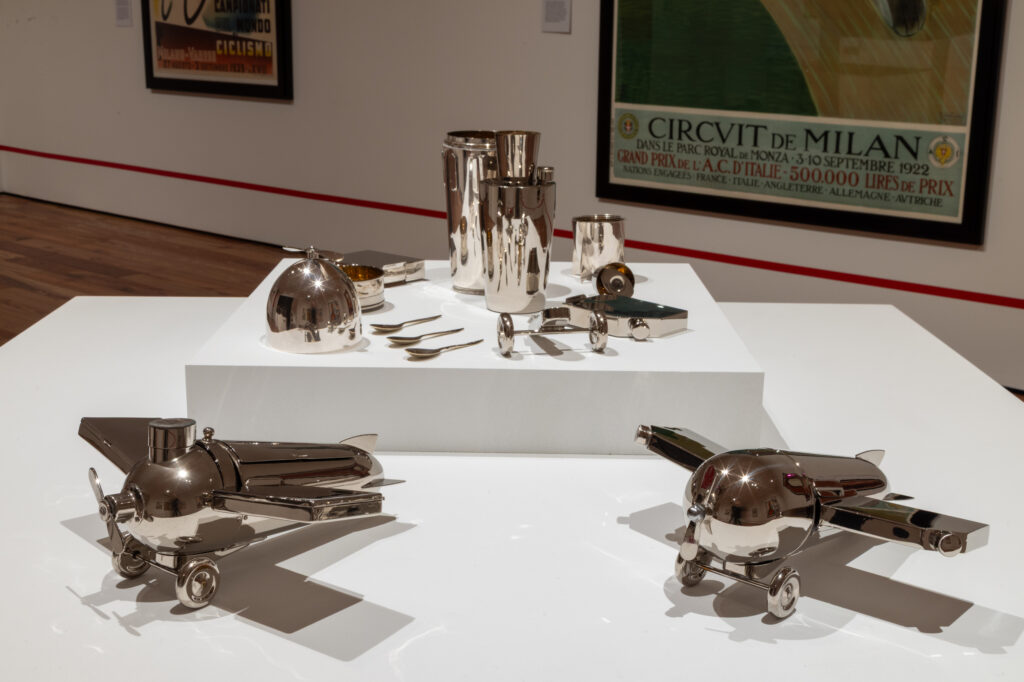
One of the more unexpected highlights, though, is the Prohibition era barware. Designed to look like silos, bowling pins, airplanes, and car radiators, these pieces were created specifically to hide illegal alcohol, and they’re an example of just how creative people can get when under pressure.
The Art Deco movement drew heavily from the industrialism of its era, weaving machine-age aesthetics directly into its artistic identity. Its connections to the development of cars, planes, and other vehicles mark the height of the industrial period in the Americas and Western Europe.
As my visit extended into the late afternoon, I had the chance to speak with another visitor on the tour, a pharmacy student who had come to the Museum with his family. Despite his STEM pursuits, he grew up surrounded by artists and has spent his life so far learning to appreciate art, even if not creating it.
My tour mate reflected on the unique impact of seeing the work in person. “You can see pictures online, but they don’t really capture the scale of it,” he said.
His favorite piece was the Normandie poster by A.M. Cassandre (1935), which he called “a really powerful image, scary, almost.” As someone drawn to ships and trains, the sweeping scale of Cassandre’s ocean liner spoke directly to him.
The exhibition’s appeal spreads through all walks of life, welcoming artists and art enthusiasts alike.
Sign up for our newsletter to get the latest Ringling College news in your inbox.
Contact:
Office of Marketing and Communications
communications@ringling.edu
941-309-4008