

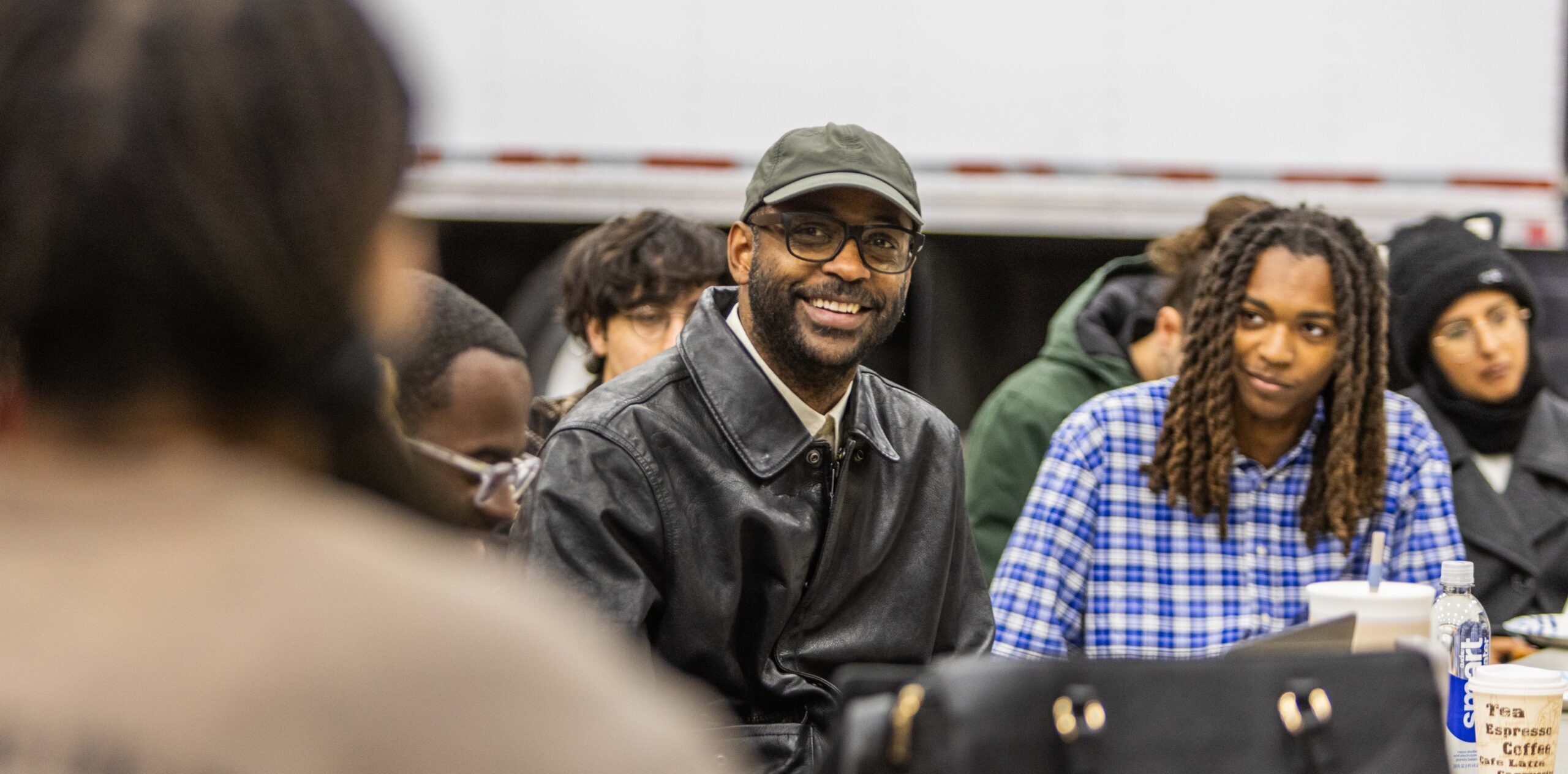
RaMell Ross, the director behind the Golden Globe-winning, Oscar-nominated historical drama Nickel Boys, brought his unique approach to cinema to Ringling College. Ross spent a day with students through a series of events across campus. Meeting with multiple groups throughout the day, Ross generously engaged students on a series of topics.
The Morganroth Auditorium buzzed with excitement from both students and faculty. Ross—a critically acclaimed artist, writer, director, and Brown University professor, and a distinctive voice in contemporary cinema—spent the day on campus as the featured guest of the 41st Annual Visiting Art Historian Lecture Series, co-hosted by the Liberal Arts and Film Departments.

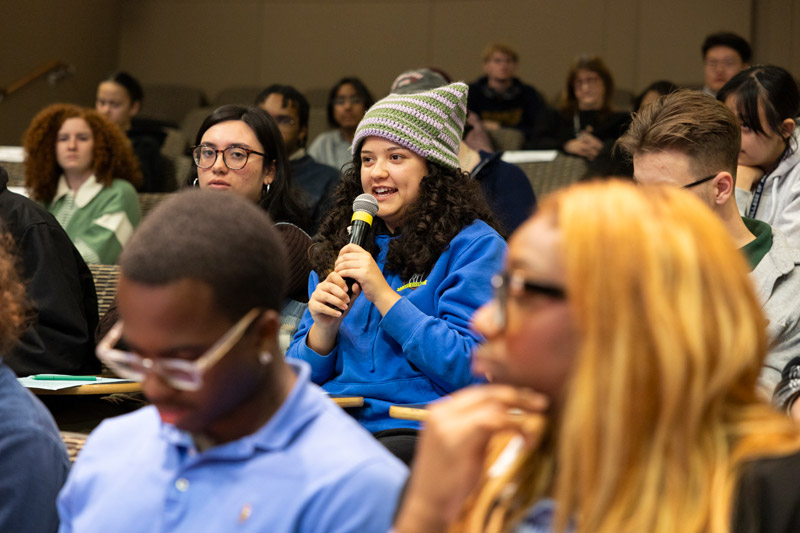
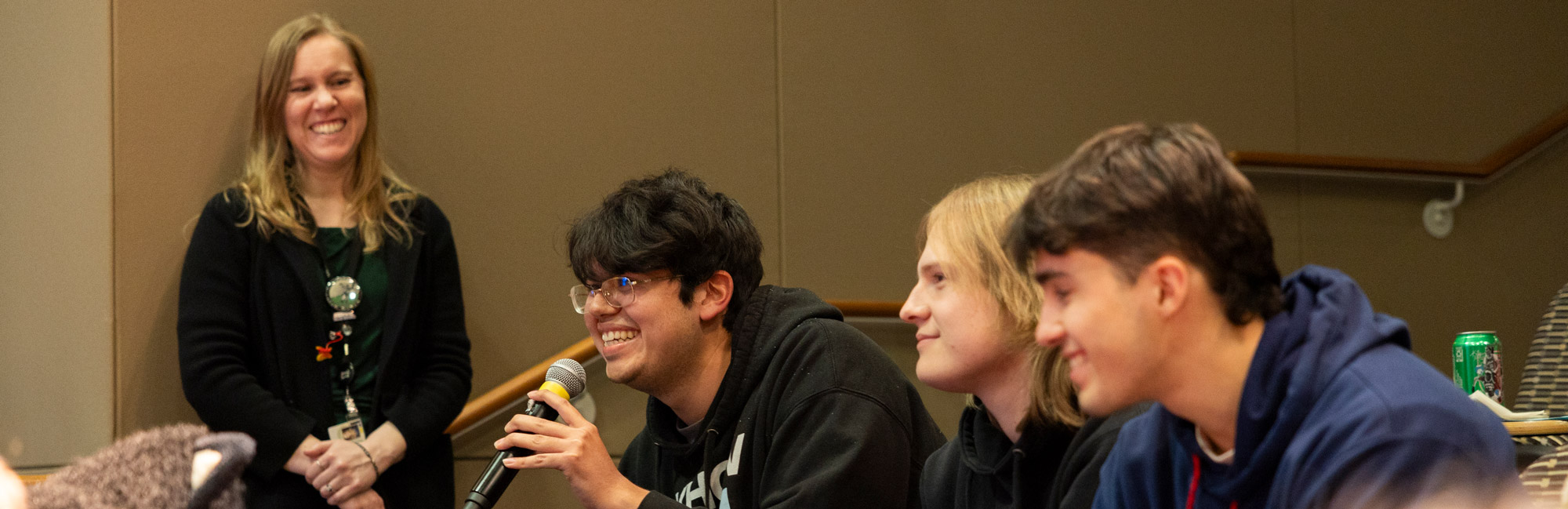
The day’s events included meeting with students on the Film Soundstages throughout the day, giving students the opportunity to sit down with the filmmaker, who chatted candidly about filmmaking, his process, and life. In the afternoon, his film Nickel Boys was screened in the Morganroth Auditorium, followed by a talk and Q&A session.
As an artist, Ross deliberately centers Black experience and perspective in his work. His path to cinema was non-linear. Before becoming a filmmaker, Ross played professional basketball for a team in Ireland’s SuperLeague North Division. Following his basketball career in Ireland, he returned to the United States to teach, a role he continues as an associate professor in the Visual Arts Department at Brown University. He has had numerous art and photography exhibitions.
His documentary debut, Hale County This Morning, This Evening (2018), earned him an Academy Award nomination for Best Documentary Feature, along with a Special Jury Award at Sundance and a Peabody Award.
He then made the leap to narrative filmmaking with Nickel Boys, adapted from Colson Whitehead’s 2019 Pulitzer Prize-winning novel, which received Best Picture and Best Adapted Screenplay nominations at the 97th Academy Awards.
Nickel Boys tells the story of two Black teenagers at an abusive Florida reform school during the Jim Crow era, inspired by the real-life horrors of the Dozier School for Boys, informed by the real-life testimonials gathered by Whitehead for the novel. What sets the film apart is its radical formal approach: shot entirely from the first-person point of view of its two protagonists, Ross’s concept of “sentient perspective” or “Black subjectivity” asks audiences not to observe these young men’s lives, but to live inside them.
For students who spent the day with Ross, the visit felt like more than an inspiring lecture. Jayde Dauley, Film Senior and Black Student Union President, who also helped give Ross a tour of the film department’s facilities and showcased Black history in the surrounding area, reflected on the significance of the visit. “As a film senior, I was ecstatic at the opportunity to meet and talk with RaMell Ross. Being able to hold conversation and ask questions about his life and work was exciting and entirely welcomed by my peers and I.”
“As a filmmaker myself, I found it helpful to receive advice from an active filmmaker in industry whose work is intentional and cultured,” Dauley shared.

Daniel Pacheco, who organized the recording of the lecture and Q&A and had the chance to speak with Ross afterwards, was struck by both the filmmaker’s generosity of spirit and the precision of his artistic thinking. “I felt as if my consciousness expanded just listening to him. He’s not only a true artist in every sense of the word, but also a scholar and one of the most inspiring filmmakers I’ve had the privilege of talking to,” Pacheco shared. “Learning about his views on cinema and his own approach to art has had a profound impact on me, and I think it’s already changed my trajectory as an artist.” One line in particular stayed with him: Ross’s observation that as an artist, “you’re always trying to make something smarter than yourself.”
“It was one of the best experiences I’ve had at Ringling by far,” Pacheco said. “I’m so grateful for Hector Sotomayor and all the people responsible for putting this together.”
The Visiting Art Historian Lecture Series is now in its 41st year, continuing its mission of bringing transformative creative voices to campus.
Sign up for our newsletter to get the latest Ringling College news in your inbox.
Contact:
Office of Marketing and Communications
communications@ringling.edu
941-309-4008